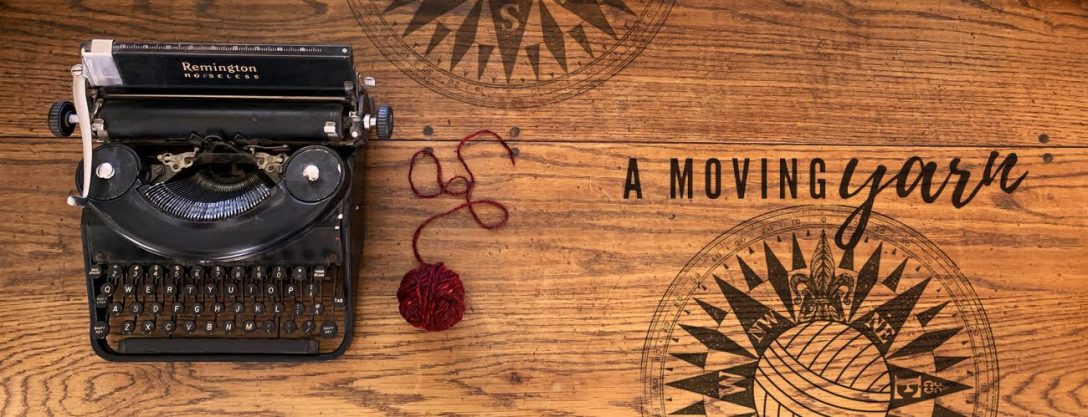

I can go a little overboard when I get started talking about things I’m into—and I am into yarn. So when my pastor asked me to talk about yarn and weaving in church this morning, I knew I would need to be careful. Because I could talk about weaving as a theological metaphor all day long. I could also study up and make a presentation about the environmental implications of fabric and the clothing industry. I could consider sociological issues, like why things that are considered “women’s work” tend to be looked down on in our culture. Or artistic issues, like why things made to serve a function tend to be called “craft” instead of “art,” and why we think “crafts” are less valuable than “arts.” Or about creativity itself, and all the angst we can feel, the idea that we should only make things if we are highly skilled and that we should only make things that are pretty or intricate or clever or at the very least, perfect.
I learned to weave in 2018. I had been a knitter for about 8 years, and I was much faster at buying yarn than I was at knitting yarn, so I wanted a new way to use the yarn I had collected. I learned to weave on a very simple tabletop loom. I learned to set up the loom with warp threads—the ones that run vertically—with the right amount of tension, and then how to pass the shuttle back and forth with the weft yarn to make fabric. There are all kinds of textured and patterned designs you can make, even on a very basic loom. Most of the weaving I do lives up to its name: it is literally called plain weave. And it is plain. Within months of learning, not at all highly skilled, I started making clergy stoles. Plain and simple. They’re pretty enough, but definitely not intricate or clever, and they are far from perfect. Today I’m working on a plain-weave clergy stole in red, the traditional liturgical color of the Holy Spirit for holy days like Pentecost, when we celebrate God’s creation of the church.
But what does all this have to do with Labor Day, or with our worship today? I grew up watching “Mister Rogers’ Neighborhood” and there was a regular segment where Mr. Rogers showed a video of a busy factory and talked about how people make things. He always emphasized this part: how people make things. You can find the factory visit videos online, and you can learn how people make crayons, or trumpets, or teddy bears. In one factory, Mr. Rogers learns how people make towels: bales of cotton are spun into yarn and then woven into lengths of cloth. Mr. Rogers said, “When we show factories, they certainly have fascinating machines, but I always emphasize that it takes people to make machines and to make them work. I like children to know that people can take pride in their work and that everyone’s job is important.”
Honestly it feels like a stretch to compare my weaving hobby with the kind of important work that we honor on Labor Day, the work God calls and equips humans to do—much less with the work God does in weaving us as individuals and into communities. But maybe something as basic as warp and weft of yarn is exactly the point. Like patchworked quilt pieces, or broken tiles assembled into mosaics, or clay shaped into a pot, or notes shaped into a song, or words shaped into a poem. Or dirt shaped into the first human. Or people shaped into a church. Small, and simple. Maybe even plain. And definitely imperfect.
When we call God “Creator,” we’re saying God keeps God’s holy hands busy. God tries new things. God delights in plain and fancy and color and texture and design and randomness and happy accidents. God values the effort and experiences of work, the learning curves, the trial and error, not just perfect outcomes. And when we say we are made in God’s image, we’re saying we get to do this too—it is who God is, and it is who we are. We worship a God who makes things and who made people who make things. So when I notice the feel of wool in my hands and the interplay of colors weaving over and under each other—when I try a new technique or I learn to fix a goof or I teach someone else—even when what I’m doing is plain, it lets me glimpse the creative work God is still doing. And whatever we make, every time we pick up our materials and begin, it affirms our small part in the creative work God is still calling and equipping all of us to do.

 a moving yarn: