This week I learned a new word (don’t you love when that happens?), in a recorded session of a workshop called Create + Engage, hosted by Anna Brones, an artist whose newsletter is one of my favorite inbox arrivals. One of the guests in the C+E session was an artist and environmentalist, and he talked about the “ecotone,” the place where two habitats meet, overlapping each other in an area of transition. He noted that an ecological ecotone is a place of exceptional and surprising creativity and new growth.
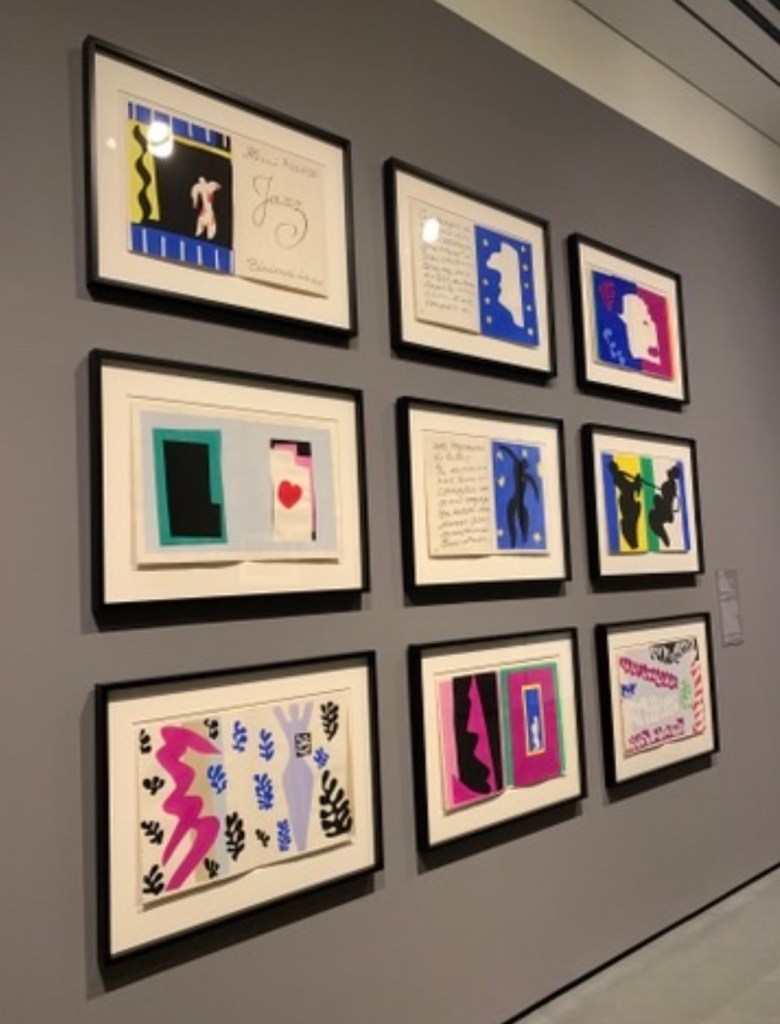
My summer class in the Lindenwood MFA program was an “ecotone” of sorts, where two fields of creativity meet. Ekphrastic poetry is (in the simplest terms) poetry about art. Every week we read and wrote poems about works of visual art. The final week we broadened the scope to include both visual art and music–my last poem was about Henri Matisse’s “Jazz” papercuts, the Baltimore sisters who befriended Matisse and collected a stunning array of his work, and a song that provided an appropriately French and jazzy soundtrack.
This was my favorite class in the program so far.
This was also my most frustrating class in the program so far.
Maybe this is an ecotone too, this meeting-place of delight and aggravation. This was a workshop class, where there should have been ample reading and sharing and responding to one another’s work… but I got less feedback and there was less participation than in any class I’ve done so far (none of which were technically workshop courses). On the plus side, the readings were wonderful and the discussion about the readings was helpful, even if only about half the class was really active. Thankfully we can learn not only in spite of frustrating environments–we can learn BECAUSE of them. I learned that I have to be 100% in this MFA for myself. I have to do it my way, and on my terms, and with the level of engagement that will allow me to get out of it what I need to get out of it. I have to “keep my eyes on my own paper.” I can’t rely on a teacher or classmates to make this experience valuable. This is (annoying, and also) extremely good news.
But in this class, things also started to come together (<–ecotone) for me in ways I couldn’t have anticipated. I was thinking about art and ekphrasis all the time. I’m still thinking about it, about how to start and keep a notebook/sketchbook/photobook to undergird future poetry writing. Thinking about visiting art museums with greater intentionality. Thinking about how ekphrasis is another way to practice visio divina–the spiritual discipline of divine “seeing.” Thinking about the blog posts I want to write about it all, and even whether I want to have a whole blog dedicated to ekphrasis (don’t get too excited!!! 😉 ).
I also learned some fundamental practical lessons. For the first time (I think in my life) I experienced what I have heard is true, that writing mostly happens in revision… I reworked poems from the ground up and discovered the real poems in that process. I confronted the fact that I need to push myself to go deeper in my poetry and to use language more powerfully (aka: I need to stop phoning it in). I also experimented with prose poetry for the first time and it **might** just be my jam.
And for the first time I got a strong sense of where I might fit in the world of creative writing, and of the kinds of projects I could get excited about for the long term. This is going to have a huge impact on my eventual MFA thesis project, and on the kinds of opportunities I may seek out down the road. If I do it right, it will also have a daily impact on my writing life–which is what I am really doing this degree for in the first place.
So here’s to all the ecotones. May we recognize them, may we delight in them, and when they make us uncomfortable or just plain piss us off, may we continue to grow in them in exciting and unexpected ways.
 a moving yarn:
In spiritual terms, Jesus’ ministry was most effective in the margins of society, also where creative growth lives. Reminds me too of liminal spaces.
Robin Sandbothe
LikeLiked by 1 person
Hi! Did you graduate with your MFA? I just interviewed with Lindenwood this week with the hopes of joining in January 2026. I might be living abroad, so because of it’s online, asynchronous format, I feel it could be the right program for me.
LikeLike
Hi! Thanks for your comment! 🙂 I’m still working on the MFA (I have just been a terrible blog updater). I’ve been taking the program slowly but have recently picked up the pace so I can finish in spring ’26. The asynchronous format has some drawbacks but overall it has worked well for me. It both demands and allows a lot of DIYing, which isn’t all bad. Feel free to let me know if you have any specific questions!
LikeLike